
Laurens County Criminal Court Records
Most serious Laurens County criminal court records are General Sessions records in Circuit Court. South Carolina's Circuit Court has a criminal division called the Court of General Sessions. The Laurens County Clerk of Court is the record custodian for those filings. Research from the local Clerk page identifies criminal warrants, indictments, pleadings, bond information, hearing requests, pleas, dispositions, sentencing, costs, fines, and related transmissions as part of the criminal court workflow.
Lower-level criminal matters can begin in Magistrate Court or Municipal Court. Laurens County Magistrate Court handles traffic and misdemeanor criminal offenses within its local summary-court role, as well as preliminary and bond-related matters. Clinton Municipal Court handles city criminal, traffic, and ordinance cases and some Laurens County preliminary cases. More serious crimes are referred to General Sessions, where the Eighth Judicial Circuit Solicitor prosecutes the case.
For a closer look at the arrest-to-charge path before the full case file develops, use the separate Laurens County arrest records and court charges page. This criminal court records page stays focused on the court case file and outcome.
Search Laurens County Criminal Cases
The main online case source is the South Carolina Judicial Branch Case Records Search, which links Laurens County to the Public Index. A user can also start from the Laurens County Public Index. Search by case number when possible. If only the defendant name is known, use the full legal name and narrow by court, date, or case type when those filters are available. Browser cookies, JavaScript, and pop-up permissions may be required for case detail windows.
- Open the South Carolina Case Records Search page or Laurens County Public Index.
- Search by defendant name or criminal case number, then filter by court or date if needed.
- Open the matching case and review charges, docket events, bond entries, pleas, disposition, and sentence entries.
- Use court rosters when the question is a future appearance or trial date rather than a copy of the case file.
- Request certified copies from the Laurens County Clerk of Court if the record must be used for legal, agency, or official purposes.
The Public Index may show the core public case record, but not every document image. The Clerk of Court remains the official copy route for General Sessions case files. For active custody, use the jail roster. For active warrants, use warrant channels. Each system answers a different question.
Laurens County Criminal Case Flow
A criminal court record grows as the case moves through each stage. A warrant or charging document may appear early. Bond and initial appearance records can connect the lower court or Bond Court to the later General Sessions file. Motions and hearing requests show disputed issues. Pleas, verdicts, dispositions, sentencing, fines, fees, and costs show the result. The court record can also show that a charge was reduced, dismissed, transferred, or resolved through diversion.
Case flow: Charges Filed › Arraignment or Initial Appearance › Pretrial and Motions › Plea or Trial › Disposition › Sentencing
| Stage | What Happens in the Record |
|---|---|
| Charges Filed | The case begins from a warrant, ticket, complaint, indictment, or other charging document. |
| Arraignment / Initial Appearance | The defendant is advised of the charge, rights, bond, or next scheduled court action. |
| Pretrial / Motions | Attorneys file motions, hearing requests, discovery matters, and court orders before plea or trial. |
| Plea or Trial | The case may end by guilty plea, trial verdict, dismissal, or another formal disposition. |
| Sentencing | If there is a conviction or plea, the court records jail, prison, probation, fines, fees, costs, or other sentence terms. |
The Eighth Judicial Circuit Solicitor's Office is the prosecution office for Laurens General Sessions cases. The Solicitor expungement page is also relevant when a criminal case later qualifies for removal from public view.
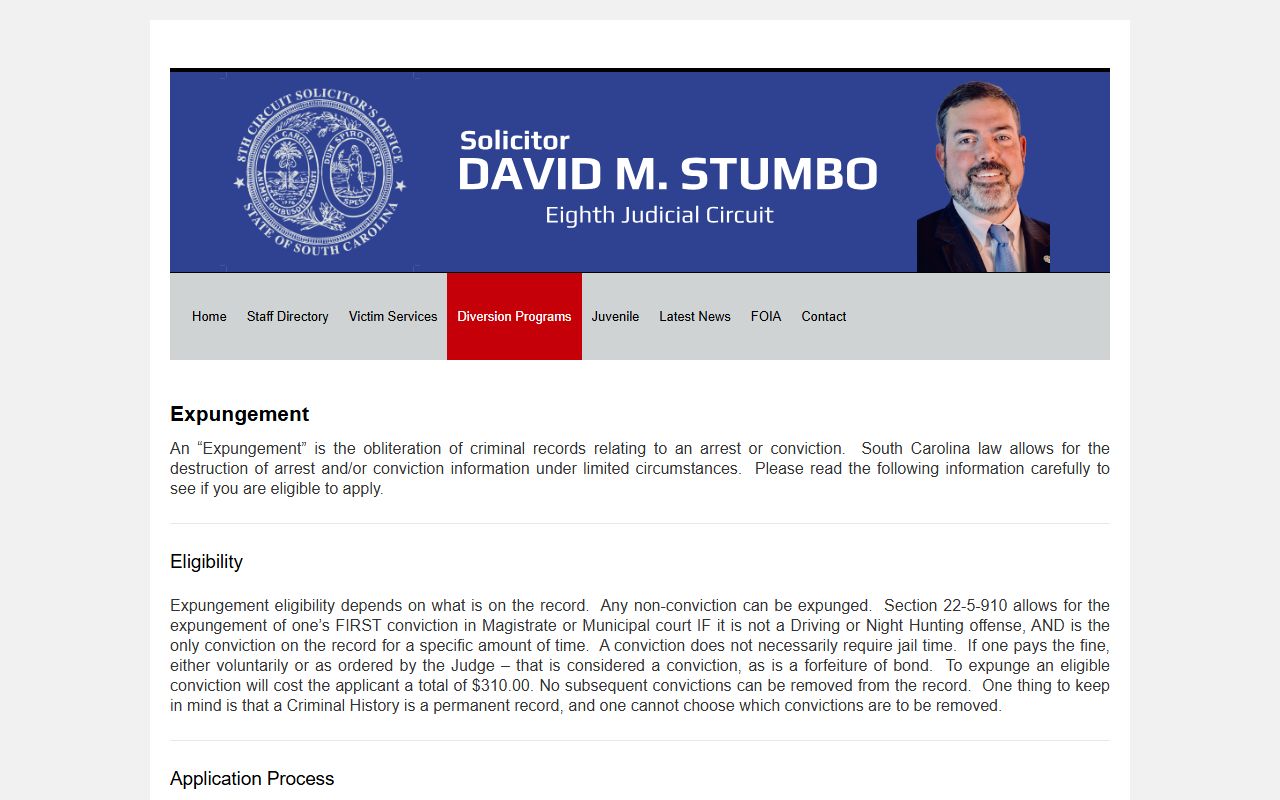
That Solicitor route matters because expungement in South Carolina is usually processed through the circuit solicitor where the charge occurred.
What Laurens Criminal Records Show
A Laurens County criminal court record is not just a list of charges. It is the court's case file. It can identify the defendant, the State, the solicitor, defense counsel, the court, the case number, charge text, warrant or indictment data, bond, hearings, motions, plea, disposition, sentence, probation, and financial obligations. The court record may also show outside participants, such as SCDC, Probation, Pardon and Parole, victims, Pretrial Intervention, or the public defender.
| Field | What It Shows |
|---|---|
| Case Number | The court's identifier for the criminal case in Laurens County. |
| Defendant | The person charged in the case, often with identifying information redacted or limited online. |
| Charge | The offense as filed, amended, reduced, dismissed, or otherwise updated in court. |
| Warrant / Indictment | The warrant, indictment, or charging document tied to the General Sessions file. |
| Bond | Release amount, conditions, or bond-related court action where available. |
| Plea | The defendant's formal response or plea outcome when entered. |
| Disposition | The outcome of the charge or case, such as guilty, dismissed, not guilty, or other result. |
| Sentence | Jail, prison, probation, fines, fees, costs, or other court-ordered punishment. |
The SCCID Laurens public defender page is a defense-side criminal court source for Laurens County.
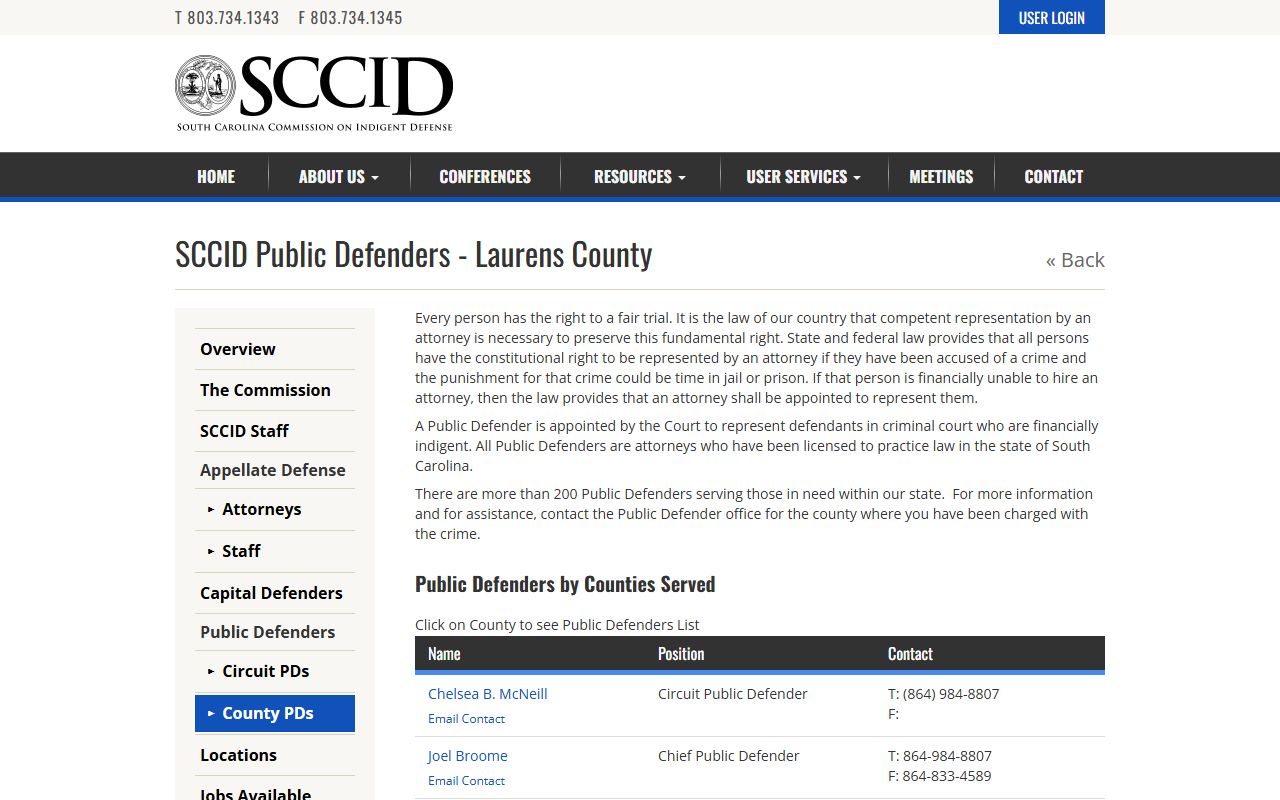
Public defender information helps explain why appointed counsel may appear in a Laurens County criminal court record when the defendant is found indigent.
Laurens Charges vs Convictions
A charge is an accusation filed in the court process. A conviction is a legal outcome after a guilty plea, guilty verdict, or other conviction-producing result. Laurens County criminal court records can show both, but they should not be read as the same thing. A record may show a charge that was dismissed, a charge that was amended, or a case that ended with a plea to a different offense. The disposition field is the key field for understanding the result.
| Point | Charge | Conviction |
|---|---|---|
| Meaning | An allegation or count filed in court. | A finding or plea that creates a criminal judgment. |
| Timing | Appears near the start of the case and may change. | Appears after plea, trial, or other final outcome. |
| Record Reading | Check amendments, reductions, dismissals, and nolle prosequi type entries. | Check disposition, sentence, probation, fines, fees, and costs. |
| Practical Risk | Can be mistaken for guilt if the disposition is ignored. | Can affect sentence, supervision, expungement eligibility, and later records. |
Recent criminal news can show how separate agencies intersect with court records. The SLED update on Laurens detention center misconduct charges is tied to law-enforcement charges, not proof of a final court outcome by itself.
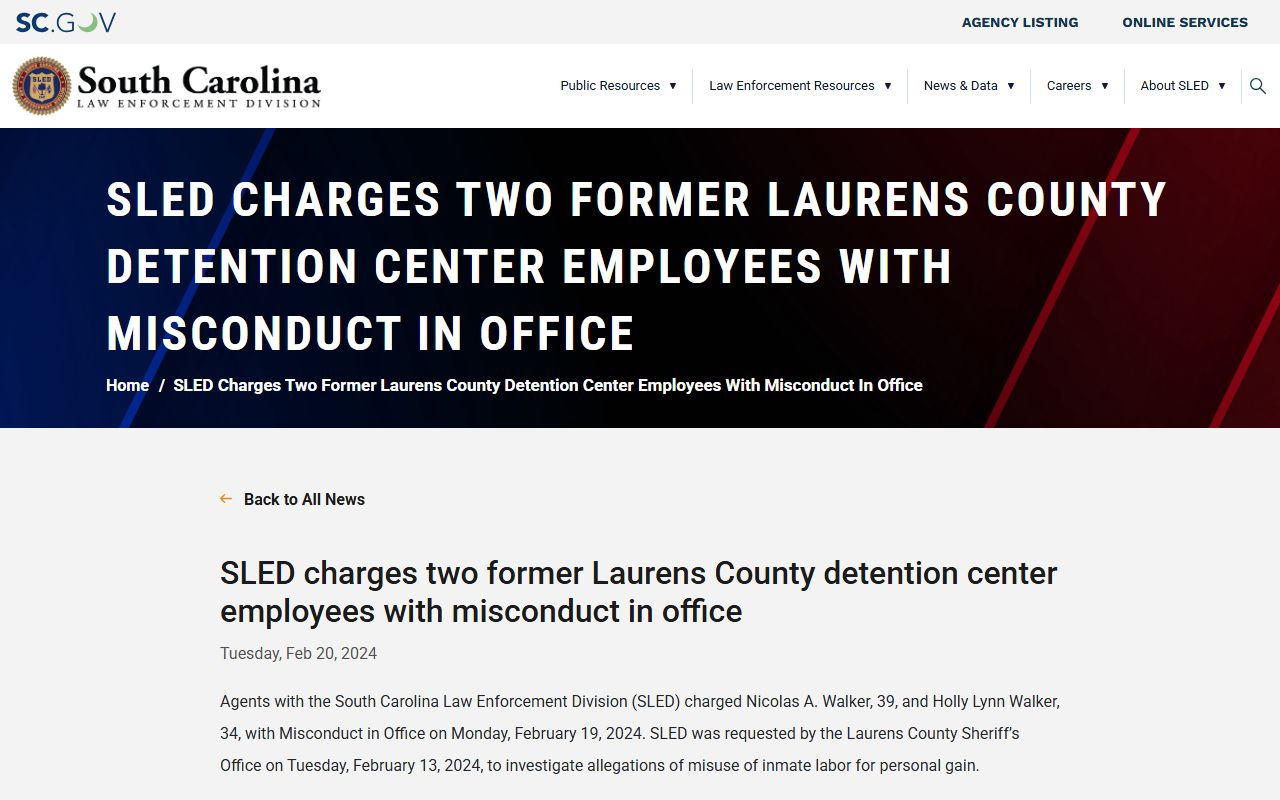
That distinction is why Laurens County criminal court records must be checked for plea, disposition, and sentencing entries after charges are filed.
Sealed and Expunged Criminal Records
Some Laurens County criminal court records are public, while others are restricted by law or court order. Juvenile records are confidential under South Carolina juvenile law. Sealed cases are hidden from ordinary public access. Expunged records are removed, destroyed, or sealed as South Carolina law provides after an eligible process is completed. The Eighth Circuit Solicitor expungement program is the local route named in the research for eligible Laurens criminal matters.
| Point | Sealed | Expunged |
|---|---|---|
| Public Visibility | Hidden from ordinary public inspection. | Removed, destroyed, or sealed under the expungement order. |
| How It Happens | By law or court order. | Through statutory eligibility, solicitor processing, and court approval. |
| Examples | Juvenile, adoption-related, sensitive, or court-sealed matters. | Certain dismissals, not-guilty outcomes, diversion completions, and specific eligible offenses. |
| Search Result | May not appear publicly or may show limited metadata. | Should be removed from public-facing systems after processing, though updates can take time. |
The statutory source is South Carolina Code Title 17, Chapter 22, including Uniform Expungement of Criminal Records Act provisions.
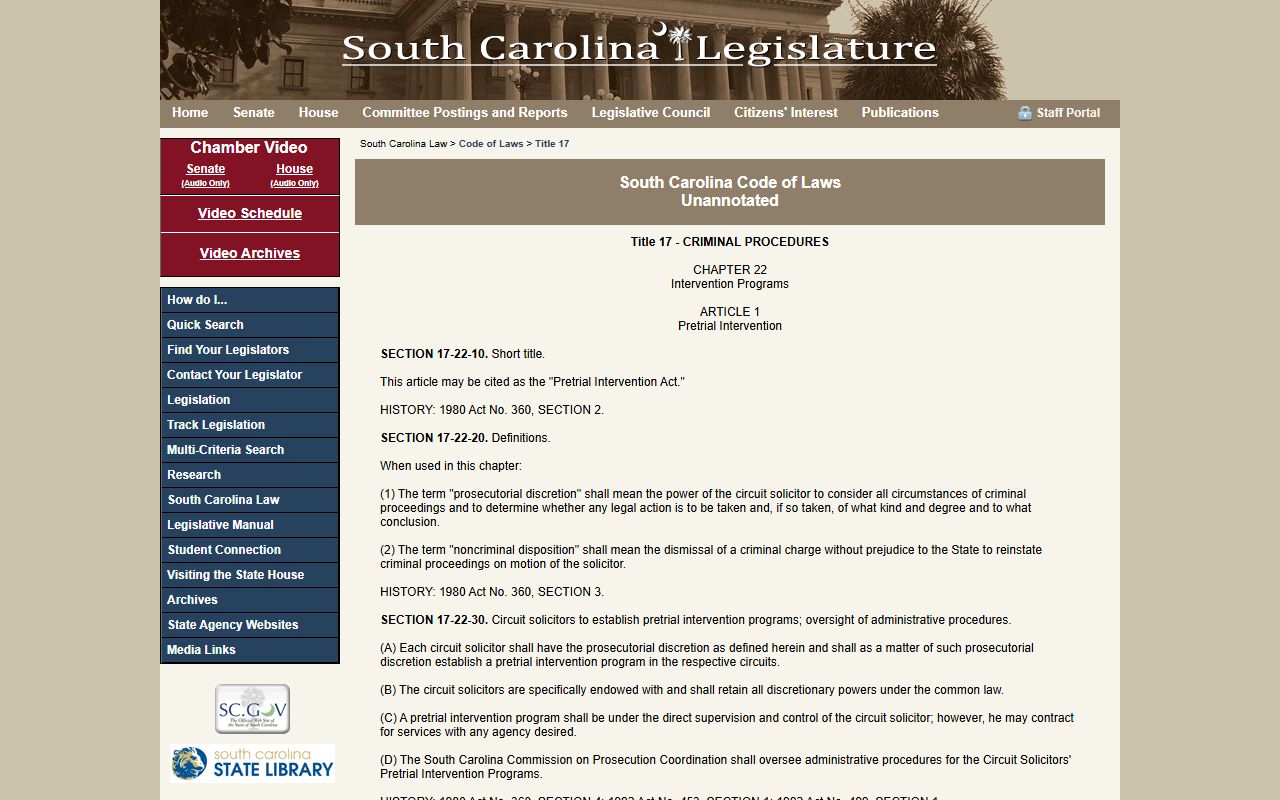
The statute source supports the warning that not every Laurens County criminal court record qualifies for expungement.
Note: A case number, exact charge, court, and disposition are often needed before an expungement review can begin.
Public Access to Laurens Criminal Records
South Carolina's Freedom of Information Act, S.C. Code Title 30, Chapter 4, supports access to public records, but it does not override court sealing rules, expungement, juvenile confidentiality, or privacy redactions. S.C. Code Section 63-19-2010 makes juvenile records confidential and generally available only by court order or to authorized persons. These rules mean a Laurens County criminal court record can be public in part, restricted in part, or unavailable online even when a court case exists.
For certified copies, the Clerk of Court is the official source. The local Clerk page gives ordinary copies at $0.50 per page and certified copies at $10.00. If the record relates to jail booking, incident reports, or law-enforcement material outside the court case file, the Sheriff's Office public-information contact is a separate route. The Laurens Sheriff's contact and FOIA page helps separate law-enforcement records from the criminal court file.
The Sheriff's FOIA contact is useful for incident or booking records, while the Clerk remains the custodian for the General Sessions criminal court record.
Laurens Criminal Record Copy Requests
Use the Laurens County Clerk of Court for copies of General Sessions criminal case records. Provide the case number if possible, the defendant name, charge or case type, and the copy type needed. If the case is active, ask whether the online docket is current and whether any hearing date has changed. If the question is only whether a person is currently in custody, the jail roster is a better starting point than a criminal case file.
Laurens County Clerk of Court
100 Hillcrest Square, Suite B
Laurens, SC 29360
Mail: PO Box 287, Laurens, SC 29360
(864) 984-3538
Fax: (864) 984-7023
Questions about prosecution, diversion, victim services, or expungement eligibility may involve the Eighth Judicial Circuit Solicitor. Questions about appointed counsel may involve the South Carolina Commission on Indigent Defense. Questions about active warrants should be confirmed through warrant channels, not inferred from an old criminal docket entry.